The Storm That Changed Our River
April 16, 2026

When Hurricane Helene swept through our region on September 26 and 27, 2024, it brought far more than wind and rain. It brought a storm system that would leave a permanent mark on our stretch of the Saluda River, and on the entire Upstate.


What Helene Did to the Upstate

To understand what happened here on the river, it helps to understand the scale of what hit our region. Helene made landfall in Florida as a Category 4 hurricane and was still a Category 1 storm as it tore northward through Georgia into South Carolina. Its track up the Appalachians forced massive amounts of moisture to rise rapidly over the mountains, a process meteorologists call orographic lift, and the result was catastrophic. As much as 21 inches of rain fell across the Upstate in a matter of hours, sending rivers and creeks surging to dangerous levels.

The Saluda and Reedy rivers hit record highs. The Enoree, Broad, Catawba, Wateree, and Congaree all reached major flood stage. The Reedy River, which normally flows through downtown Greenville at less than one foot, crested above 13 feet. Cleveland and Unity parks were completely submerged for hours.

More than 745,000 electric customers across the state lost power, more than half of them Duke Energy customers in the Upstate. Helene was described by utility officials as unprecedented damage, comparable to or worse than what the region saw after Hurricane Hugo in 1989. In the Upstate alone, more than 500,000 people were without power as crews worked around the clock to restore service.

Across the Upstate, lives were lost. Four people died in Greenville County when trees struck their homes or yards. Five people were killed in Spartanburg County. Two people died in Anderson County. Two volunteer firefighters in Saluda County, Chief George Chad Satcher and 18-year-old Landon Bodie, were killed when a tree fell on their fire truck as they responded to a call. The statewide death toll reached 29. President Biden declared a major disaster for South Carolina on September 29, 2024, unlocking federal recovery aid across dozens of counties.


What It Did to Our River

Here on the Saluda, the floodwaters didn't just rise, they reshaped the land. The sheer force of the current eroded our riverbank, uprooted trees, and swallowed entire sections of the shoreline. The river's edge is not what it was. When the water finally receded, it left behind a changed landscape: debris piled into bends and coves, silt coating once-clear banks, and deep scars in the earth where the current carved its own new path.

This is now a defining chapter in the story of our community and this river. Helene didn't just pass through. It reshaped the ground beneath our feet and left us with the work of rebuilding, not just structures, but our relationship with the water we call home.


A Note on Our Neighbors

Even as we take stock of the cleanup still ahead, it is hard to focus on our own inconveniences when we know what happened just across the state line. Western North Carolina, including Asheville and the surrounding mountains, suffered catastrophic and historic losses: communities cut off, bridges destroyed, and lives upended in ways that will take years to fully rebuild. Our cleanup is ongoing and real, but our hearts remain with those neighbors.


Welcome Back to the River

As you make your way down the Saluda, you will see downed trees and debris along the banks. The land on either side of the river is privately owned, and our neighbors are still working through the cleanup at their own pace. That effort will take time, and we ask for your patience and respect as it continues.

We are genuinely glad to welcome everyone back to the water. Thank you for your love and support for this stretch of the Saluda River. It means a great deal to all of us who call it home.
April 16, 2026
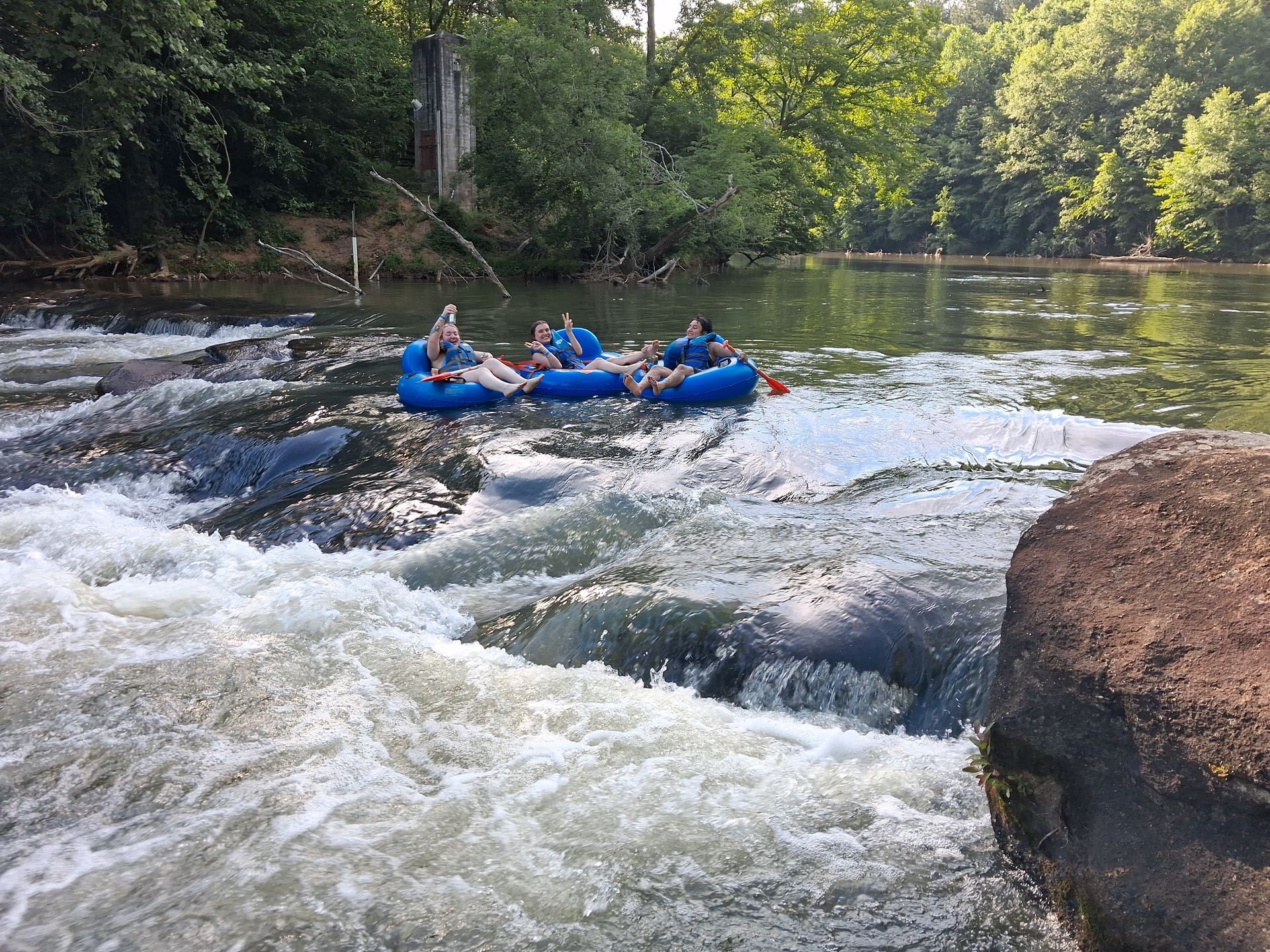
The First-Timer's Guide to Floating with SORC The Saluda Current So you've heard about floating the Saluda and you're trying to figure out what the day actually looks like. Good news: it's about as low-stress as an outdoor adventure gets. Here's everything you need to know before you show up. Start at SORC, End at SORC All floaters meet us at  1001 Old Easley Hwy, Greenville, SC 29611, United States of America  in Greenville. Park here, sign in, grab your life jacket, and hop on one of our buses to the drop-in point. When your float is done, we'll pick you up and bring you right back to your car. No shuttles to coordinate, no second vehicle, no logistics headaches. Just show up and float. What the River Is Actually Like The Saluda River runs about 200 miles total, and different sections of it are completely different experiences. Our stretch? We'd call it the best part, but we're a little biased. What you'll find here is a genuine lazy river: calm, unhurried sections for drifting and soaking in the scenery, broken up by small rapids that keep things interesting. The water temperature through the summer typically hovers in the 70s, which makes it just about perfect for a hot Upstate afternoon. Depth varies quite a bit throughout the float, anywhere from a few feet to 30 feet or more in places, so life jackets are required for everyone and provided for you at check-in. Plan for the float to take somewhere between two and three and a half hours depending on the speed of the water that day. Bring snacks, bring sunscreen, and plan to be out there a while. That's the whole point. Who Can Float Adults, kids, and dogs are all welcome. For safety, kids need to be at least 42 inches tall to float with us. Our provided life jackets fit adults and youth sizes between 50 and 90 pounds. If your little one is under 50 pounds and doesn't fit our jackets, just bring a Coast Guard-approved life jacket for them and you're all set. As for dogs: they float free. The only requirements are that they're well-behaved and adorable, and since we've never encountered a non-adorable dog, the policy has a 100% pass rate so far. Fair warning: your dog will be petted by strangers. That's non-negotiable. What to Pack You will get wet. Plan accordingly. Here's the short list: Bathing suit or comfortable clothes you don't mind soaking Water shoes, sneakers, or sandals that strap to your feet (flip flops have a tendency to disappear in the river) Snacks and water for the float Sunscreen A dry bag for your phone or anything you'd rather keep dry If you forget something, don't stress. Our shop carries snacks, ice, sunscreen, water shoes, hats, and more. We also offer a key saver service at check-in if you'd rather not bring your keys on the water. Coolers are welcome on the float, and you can rent a cooler carrier tube for $10 when you book. Just keep it to cans and plastic: no glass bottles or liquor on the river, please. When We're Open We run Memorial Day through Labor Day, Fridays through Sundays from 10 am to 4 pm. We also add special summer holiday dates throughout the season, so follow us on social media to stay up to date. We strongly recommend booking online before you arrive. Summer weekends fill up, and booking ahead means we can get you checked in and on the water without delay. Weather and Cancellations We float rain or shine as long as there's no active storm. If the weather looks questionable the day of your trip, don't panic: you can reschedule directly from your confirmation email. If we have to cancel on our end due to weather or river conditions, you'll hear from us and can either reschedule or receive a gift card for a future float. Groups Bringing a crew of 10 to 30? Select the Group Tubing Ticket when booking and you'll automatically get the group discount. For groups over 30, give us a call so we can make sure we have enough room on the river for everyone. End the Day at The Oxbow After two or three hours on the water, you're going to be hungry. Good news: you don't have to go far. The Oxbow is our on-site restaurant, and it's the perfect place to dry off and wind down after your float. They specialize in authentic British Fish & Chips, made the right way, and a rotating lineup of homemade ice cream specials that are worth the trip on their own. Whether you're craving something savory after a long float or just need a scoop of something cold before you head home, The Oxbow has you covered. The Oxbow is open Thursday through Saturday from 4 to 8 pm, so if your float falls on one of those days, plan to stick around a little longer. You earned it. The first float is always the best one because you don't know what to expect. After that, you'll be the one telling your friends about it. Cold fish and chips and a scoop of homemade ice cream at the end doesn't hurt either. We'll see you on the water.
April 16, 2026
What Lives in and Around the Saluda River: A Floater's Field Guide One of the quiet rewards of a river float is the wildlife. You're low to the water, moving slowly, and if you keep your eyes open, the Saluda puts on a show. This stretch of river through Upstate South Carolina runs through a rich mix of riparian forest, shallow shoals, and calm bends, and that variety of habitat supports an impressive range of creatures. Here's a look at what you're likely to spot, and what to watch for. The Birds Great Blue Heron You'll almost certainly see one. Blue herons are among the most common birds along the Saluda watershed, Upstateforever and they tend to stand completely still in the shallows until you drift just close enough to startle them. Then they lift off with that slow, prehistoric wingbeat and relocate about a hundred yards downstream. They're highly adaptable hunters, feeding mostly on fish but willing to take frogs, small birds, and even turtles when the opportunity arises. South Carolina Department of Natural Resources Their grayish-blue silhouette against the treeline is one of the most iconic sights on the river. Belted Kingfisher The kingfisher is smaller, louder, and faster. It's a small, blue-gray bird with a white chest and a band of blue and rusty orange, South Carolina Department of Natural Resources and it tends to announce itself with a distinctive rattling call before you ever see it. Look for it perched on a low branch overhanging the water, scanning the surface below. When it spots a fish, it drops straight down and hits the water like a dart. Kingfishers blend surprisingly well into fall foliage along the river, so they're easy to miss if you're not watching closely. Scwildlife Osprey Ospreys are a regular presence along the Saluda, Upstateforever and they're worth watching for. They circle high above the water, hovering when they spot a fish, then fold their wings and drop in a steep dive, hitting feet-first. Unlike most birds of prey, the osprey is almost exclusively a fish hunter, and the Saluda gives them plenty to work with. Bald Eagle Yes, really. The American Bald Eagle, once endangered but now recovering, is known to exist within the Saluda River watershed. Congareeriverkeeper Floaters on the upper Saluda have reported spotting them in the more remote stretches above the bridges, where the river takes on a genuine wilderness character. Scwildlife Sightings aren't guaranteed, but they happen, and it's worth scanning the tops of tall dead trees along the banks. The Fish The Saluda is a legitimate fishery. Largemouth bass, catfish, and bream can be found throughout the watershed, Upstateforever along with redbreast sunfish and redear sunfish in the warmer, shallower stretches. Warmwater species in the river system include chain pickerel, bluegill, carp, channel catfish, yellow perch, and gizzard shad. Thereserveonthesaluda Even if you're not fishing, you'll likely see fish. On calm days, bass hold in the shade of overhanging trees and dart out to feed. Bream flash in the shallows. Keep an eye near the surface on slower bends and you may catch them rising to insects in the early morning. The Turtles Slider turtles are one of the most reliably visible animals on the river, often sunning themselves by the dozens on half-submerged logs and fallen trees along the banks. Scwildlife They're easiest to spot on calm, sunny days when they stack up on every available surface to warm up. The catch is they're skittish: a kayak coming too close will send them slipping off their perch one by one into the water with a soft splash. If you drift quietly, you can sometimes get within a few feet before they bail. The Mammals River Otter River otters are present on the Saluda and neighboring river systems, though they tend to be elusive. Early morning floats give you the best shot at a sighting. You're more likely to hear them before you see them: a splash, a quick movement along the bank, and then a sleek brown shape sliding under the surface. Otters are known to eat almost any animal matter found in aquatic systems, including crayfish, fish, turtles, and waterfowl, South Carolina Department of Natural Resources which makes the Saluda good habitat for them. White-Tailed Deer Deer regularly come to the river's edge to drink, especially at dawn and dusk. If you're out early, keep an eye on the banks where the forest meets the water. They'll often stand and watch a passing kayak for a long moment before retreating into the trees. A Note on the Edges Some of the richest wildlife activity happens right at the transition between water and land. The root systems of sycamores and river birches that line our banks provide habitat for everything from nesting birds to crayfish. Even the debris and fallen trees left behind by Hurricane Helene now serve as new perches, shelter, and hunting grounds for the wildlife along this stretch. The river is always adapting, and so is everything that lives along it. Tips for Spotting Wildlife on Your Float Keep your paddle quiet on the water. Sound travels fast on a river, and most animals will hear you before they see you. If you want a closer look at something, stop paddling and let the current carry you. Early morning floats are almost always more productive for wildlife. And bring binoculars if you have them: the kingfisher and the bald eagle both reward a closer look. The Saluda River is more than a float. It's a living system, and every trip down the water is a little different. Pay attention, and it will give you something to remember.